Information travels by copy and paste.
The same data changes format, duplicates or disappears between an email, a spreadsheet and a back office.
Custom business tools
Roles, rules, data and exceptions become a tool the team can use and improve.
When things stop working
Information travels by copy and paste.
The same data changes format, duplicates or disappears between an email, a spreadsheet and a back office.
Rules live in people’s memories.
Exceptions are known to a few people and rarely reflected in the system.
The tool ends up dictating how work happens.
People work around it, re-enter information and manually check what should remain explicit.
What we bring together
It needs a coherent way to distribute responsibilities, move data and make decisions verifiable.
Who sees, decides, edits or approves each piece of information.
What should happen, including cases outside the normal path.
A clear source, understandable states and less re-entry.
Visible errors and ways to recover before they become costly.
The system in practice
A product connecting several participants across acquisition, qualification, distributed production and operations.
Explore CrowdFactory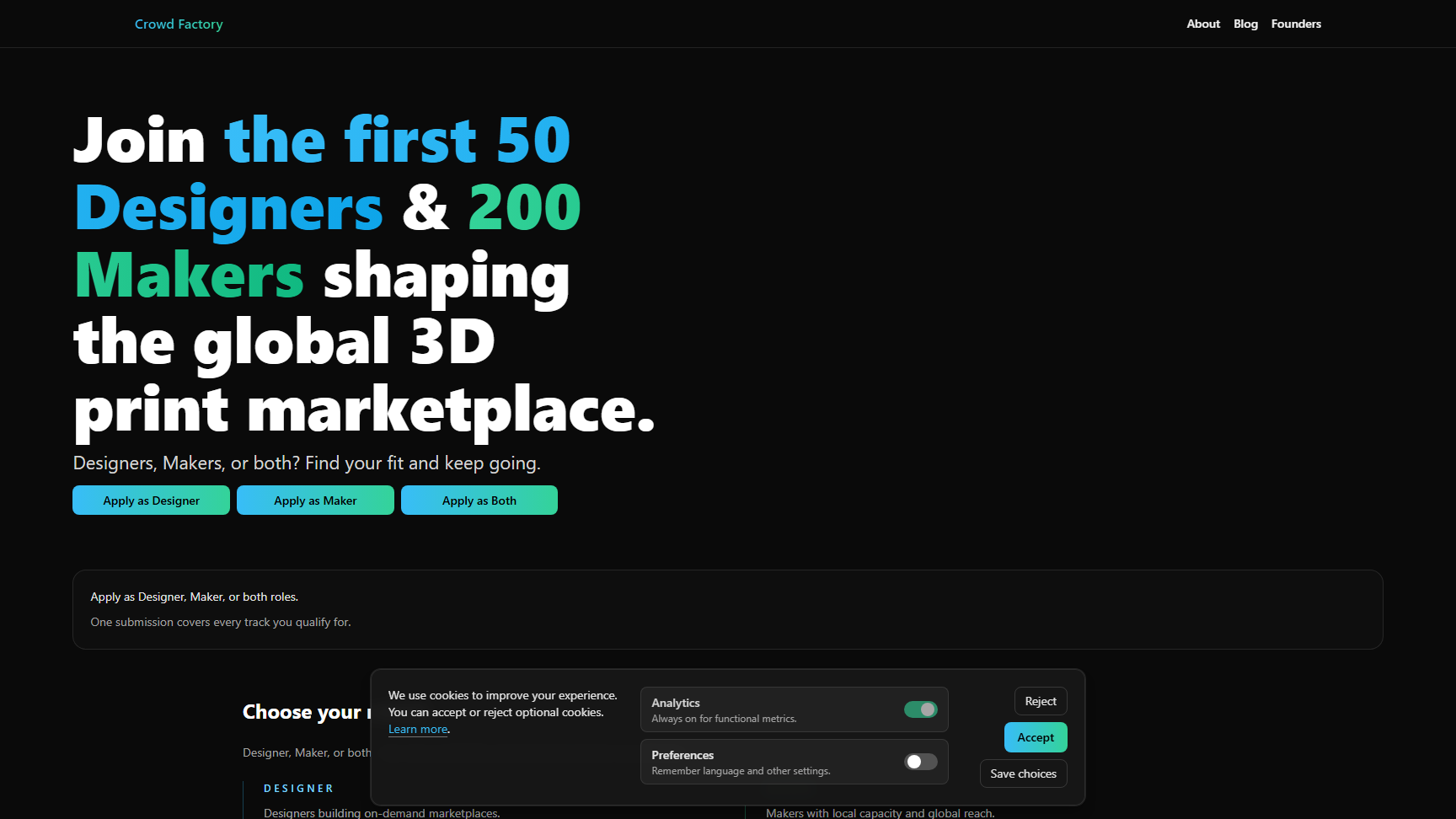
Project support
Operational support for CIJF to administer, update and improve the Jeux de la Francophonie website.
View the assignmentMy contribution
Map roles, data, rules, frustrations and dependencies before deciding what to build.
Operational journeys, dashboards and back offices organised around the tasks to complete.
Build priority features, access rights, integrations and necessary checks.
Acceptance testing with users, controlled transition and improvements based on observed usage.
Useful questions
Not necessarily. An assignment can improve a specific step, connect existing tools or replace only the part that has become fragile.
Yes. These often provide a good starting point to identify data, rules and decisions before designing a suitable interface.
The scope is built around one complete, testable use case. Important decisions are validated early before extending the tool with more features.
Your project